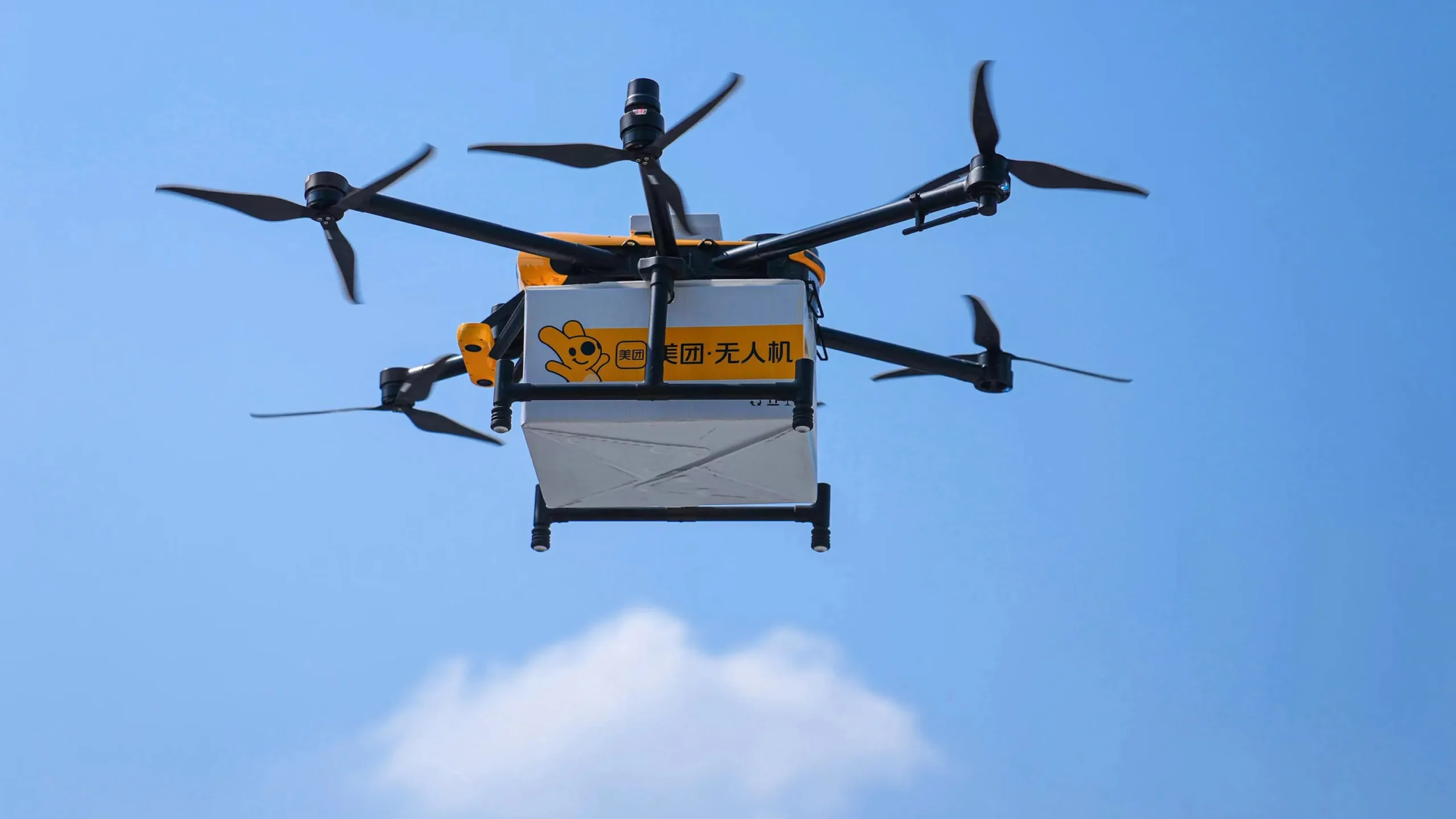
The Tech Behind Autonomous Delivery Drones

The technology behind autonomous delivery drones combines advanced sensors, precise navigation systems, and artificial intelligence to operate reliably in complex environments. These components work together to detect obstacles, determine accurate positioning, and adapt to changing conditions in real time. The integration of communication protocols ensures continuous control and safety. Understanding how these systems synchronize is essential to grasping the full potential and limitations of autonomous drone logistics.
Sensors and Perception Systems
How do autonomous delivery drones perceive their environment with such accuracy? They rely on advanced sensors calibrated for optimal obstacle detection, ensuring precise spatial awareness.
Sensor calibration fine-tunes measurements, minimizing errors and enhancing reliability. This sophisticated perception system enables drones to detect hazards swiftly, maintaining safety and efficiency while granting operators a seamless sense of freedom in autonomous navigation.
See also: The Role of Technology in Modern Healthcare Systems
Navigation and GPS Technology
Navigation and GPS technology form the core framework enabling autonomous delivery drones to determine their precise position and maintain accurate flight paths.
Advanced systems integrate obstacle avoidance algorithms and real-time GPS data, optimizing route efficiency while supporting effective battery management.
This synergy ensures safe, reliable navigation, granting drones the autonomy needed to deliver with precision and freedom.
Artificial Intelligence and Machine Learning
Artificial Intelligence (AI) and Machine Learning (ML) are critical components that enable autonomous delivery drones to adapt to dynamic environments and improve operational efficiency.
They facilitate autonomous decision making through advanced data processing, allowing real-time analysis of sensor inputs and environmental variables.
This integration ensures precise navigation, obstacle avoidance, and optimized routing, empowering drones with enhanced autonomy and reliability.
Communication and Control Systems
Communication and control systems form the backbone of autonomous delivery drones, enabling seamless coordination between onboard components, ground stations, and networked entities.
They utilize robust wireless protocols and fail safe mechanisms to ensure reliable command transmission, real-time monitoring, and rapid recovery from faults.
This infrastructure helps maintain operational integrity and provides users with dependable, unrestricted delivery capabilities.
Conclusion
The integration of sensors, GPS, AI, and communication systems underpins the reliability of autonomous delivery drones. Notably, studies indicate these systems achieve over 95% obstacle detection accuracy, significantly reducing delivery errors. This technological synergy enables continuous, operator-independent operation in complex environments, transforming logistics efficiency. As advancements progress, the precision and safety of autonomous drones are poised to further enhance, solidifying their role as a pivotal component in modern supply chain solutions.